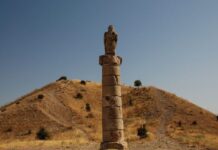

After ending the long and difficult war with the people of Miletus, King Alyattes ruled the land of Lydia for a total of fifty-seven years. His reign was remembered as strong and successful, especially because he brought peace after many years of conflict. When Alyattes finally died, he left behind a powerful and wealthy kingdom.
Alyattes was the second ruler of his family to send valuable offerings to the sanctuary of Apollo at Delphi. These gifts were sent after he recovered from a serious illness, as a sign of thanks to the gods. Among his offerings was a large bowl made of pure silver, along with a steel salver that was beautifully decorated with inlaid designs. This object was considered one of the finest works of art among all the treasures at Delphi City Tours Sofia.
The salver was made by Glaucus of Chios, a highly skilled craftsman. He was famous because he was the first person to invent the art of inlaying steel, a technique that impressed everyone who saw it. Because of this craftsmanship, Alyattes’ offering became especially admired by visitors to Delphi.
Croesus Becomes King of Lydia
After Alyattes died, his son Croesus took the throne. Croesus was thirty-five years old at the time and already known for his wealth and ambition. His reign would later become famous throughout the ancient world.
Soon after becoming king, Croesus began to expand his power. The first Greek city he attacked was Ephesus. When Croesus laid siege to the city, the Ephesians tried a religious act to protect themselves. They symbolically dedicated their city to the goddess Artemis (Diana) by stretching a rope from the city wall all the way to her temple. This temple stood about seven furlongs away from the ancient city.
Croesus and the Greek Cities of Asia
Ephesus was only the beginning. After that, Croesus made war on every Ionian and Aeolian city in Asia Minor. Sometimes he had real reasons for attack, such as past disputes. Other times, when no good reason existed, he used weak excuses to justify his wars Periander of Corinth and His Time.
Through these campaigns, Croesus succeeded in conquering all the Greek cities in Asia. He did not destroy them, but instead forced them to pay tribute and accept his rule. This greatly increased his wealth and power and made Lydia the strongest kingdom in the region.
The Plan to Attack the Islands
After conquering the mainland cities, Croesus began to think about building ships and attacking the Greek islands. Preparations were already underway when a wise man changed his mind. According to different stories, this man was either Bias of Priene or Pittacus of Mytilene, both famous Greek thinkers.
When Croesus asked if there was any news from Greece, the wise man replied that the islanders were gathering ten thousand cavalry to attack Lydia. Croesus laughed and said he wished the gods would make the islanders foolish enough to fight cavalry on land.
Wise Advice and a Change of Plans
The wise man then explained his meaning. He said that Croesus wished to fight the islanders on land, where Lydia was strong. But the islanders would much rather fight at sea, where they had the advantage. If Croesus built ships and attacked them, the islanders would gladly meet the Lydians on the water and take revenge for their mainland relatives who were under Lydian rule.
Croesus was deeply impressed by this advice. He realized that the words were wise and logical. As a result, he abandoned his plan to build ships and instead chose peace. He made friendly alliances with the Ionian island cities, ending the danger of war at sea.
Wisdom Over War
This moment shows that Croesus, although powerful and wealthy, was also capable of listening to wisdom. By choosing diplomacy over war, he avoided a risky conflict and secured peace with the island Greeks. This decision marked an important moment early in his reign and helped shape his reputation as one of the most famous kings of the ancient world.